

773-622-6100

How Earnest Money Disputes Are Resolved in Illinois Real Estate Deals
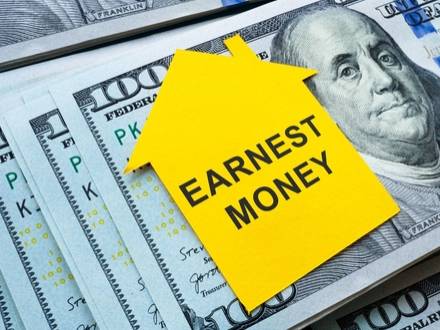 Earnest money is the most common concern when a real estate deal falls apart. This is the deposit a buyer puts down when they make an offer on a home. It shows the seller that the buyer is serious. But when something goes wrong before closing, that money becomes a source of real conflict.
In Illinois, how that dispute gets resolved depends on the contract, the reason the deal fell through, and whether the parties can come to an agreement on their own. If you are caught in a dispute over earnest money, a Cook County residential real estate transaction lawyer can help you understand your rights and what your next steps should be.
Who Holds the Earnest Money During a Real Estate Transaction in IL?
In Illinois, earnest money is typically held in escrow by a neutral third party while the transaction moves forward. This is often the seller's real estate brokerage, a title company, or an attorney. The person or company holding the funds is called the escrow holder, and they are not allowed to release the money without either a written agreement from both parties or a court order.
This is an important detail. Even if you believe you are clearly entitled to the money, the escrow holder cannot simply hand it over because one side asks for it. Both parties have to agree, or someone has to take legal action.
What Does the Contract Say About Earnest Money?
The contract is the starting point for any earnest money dispute. Most Illinois residential real estate contracts spell out exactly what happens to the deposit if the deal does not close. The Multi-Board Residential Real Estate Contract includes specific language about when earnest money is refundable and when it is not.
Generally, if the buyer cancels for a reason allowed by the contract, such as a failed inspection or a financing contingency that was not met, the earnest money goes back to the buyer. If the buyer walks away without a valid contractual reason, the seller may have the right to keep it. If the seller backs out, the buyer is typically entitled to a full refund.
Reading the contract carefully before signing is one of the best ways to avoid a dispute later. Understanding what the contingencies say and how they work gives both sides a clearer picture of their rights from the beginning.
What Are the Most Common Reasons Earnest Money Disputes Happen in Illinois?
Disputes tend to happen when both sides see the same situation differently. One party believes they had a valid reason to cancel. The other party disagrees.
Common situations that lead to disputes include:
-
A buyer claims the inspection revealed serious problems, but the seller believes they were minor.
-
A buyer's financing fell through, but the seller argues the buyer did not try hard enough to get a loan.
-
The buyer missed a deadline, and the seller says the contingency no longer applies.
-
The deal fell apart because of disagreements during attorney review.
-
One side claims the other breached the contract first.
In Cook County, where real estate transactions move quickly and competition can be intense, these disputes can escalate quickly. The more money involved, the higher the stakes for both sides.
How Are Earnest Money Disputes Resolved in Illinois?
Illinois law provides a few different ways these disputes can be resolved. The first and simplest option is for both parties to reach a written agreement about how the funds should be split or returned. This is called a mutual release, and it allows the escrow holder to release the money without going to court.
Under the Illinois Real Estate License Act, 225 ILCS 454, escrow holders have specific legal obligations when a dispute arises. If the parties cannot agree, the escrow holder may be required to hold the funds until they receive a court order telling them what to do. In some cases, the escrow holder can file what is called an interpleader action, which is a legal process where they ask a court to decide who gets the money so they are no longer responsible for holding it.
If the dispute ends up in court, a judge will look at the contract language, the facts of the situation, and Illinois law to decide the outcome.
What Should You Do If the Other Party Is Refusing to Release the Earnest Money?
If the other side is refusing to sign a mutual release and you believe you are entitled to the funds, you have a few options. You can try to negotiate directly, involve your attorney to send a formal demand, or pursue legal action. Doing nothing is rarely a good strategy because the money will stay in escrow indefinitely until someone takes action.
Schedule a Free Consultation With Our DuPage County Real Estate Attorney
Whether you are a buyer trying to get your deposit back or a seller who believes you are owed that money, obtaining legal representation is a great way to fight for your interests. Whitacre & Stefanczuk LTD is an intimate practice where communication is a priority, and every client is treated like family. We want you to feel comfortable through every step of the process, no matter how complicated things get.
Call 773-622-6100 to schedule your free consultation with our Cook County residential real estate transaction lawyer today. Attorney Dan Stefanczuk is a first-generation Polish American who speaks fluent Polish and has been active in the Polish community for over 11 years.

Located in Oak Brook, Illinois, the attorneys at Whitacre & Stefanczuk LTD are fluent in English and Polish and serve clients in and around the communities of Chicago, Oak Park, Skokie, Schaumburg, Arlington Heights, Wheaton, Lombard, Downers Grove, Glen Ellyn, Elmhurst, Naperville, DuPage County, and Cook County.
Results listed are not a guarantee or indication of future case results.
900 Jorie Blvd, Suite 200, Oak Brook, IL 60523
773-622-6100
Contact Our Firm
 The use of the Internet or this form for communication with the firm or any individual member of the firm does not establish an attorney-client relationship. Confidential or time-sensitive information should not be sent through this form.
I have read and understand the Disclaimer and Privacy Policy.


Pay with ZelleClick Here to Copy Email |

